Deo
A catalytic filter captures odour molecules and oxidises them, using the oxygen in the air, into carbon dioxide and water. The catalyst is not used up, so it keeps working for up to 10 years with no power and no refills.
Technology
The power of photocatalysis
VITESY turns light and air into cleaning power. Photocatalysis and catalysis break down bacteria, odours and the gas that ripens food, instead of trapping them in a filter or covering them with perfume.
Photocatalysis
Think of how plants use sunlight to turn carbon dioxide into oxygen. Photocatalysis also runs on light: visible-light LEDs shine on a filter coated with a nanomaterial, which uses the water and oxygen already in the air to make compounds that neutralise impurities.
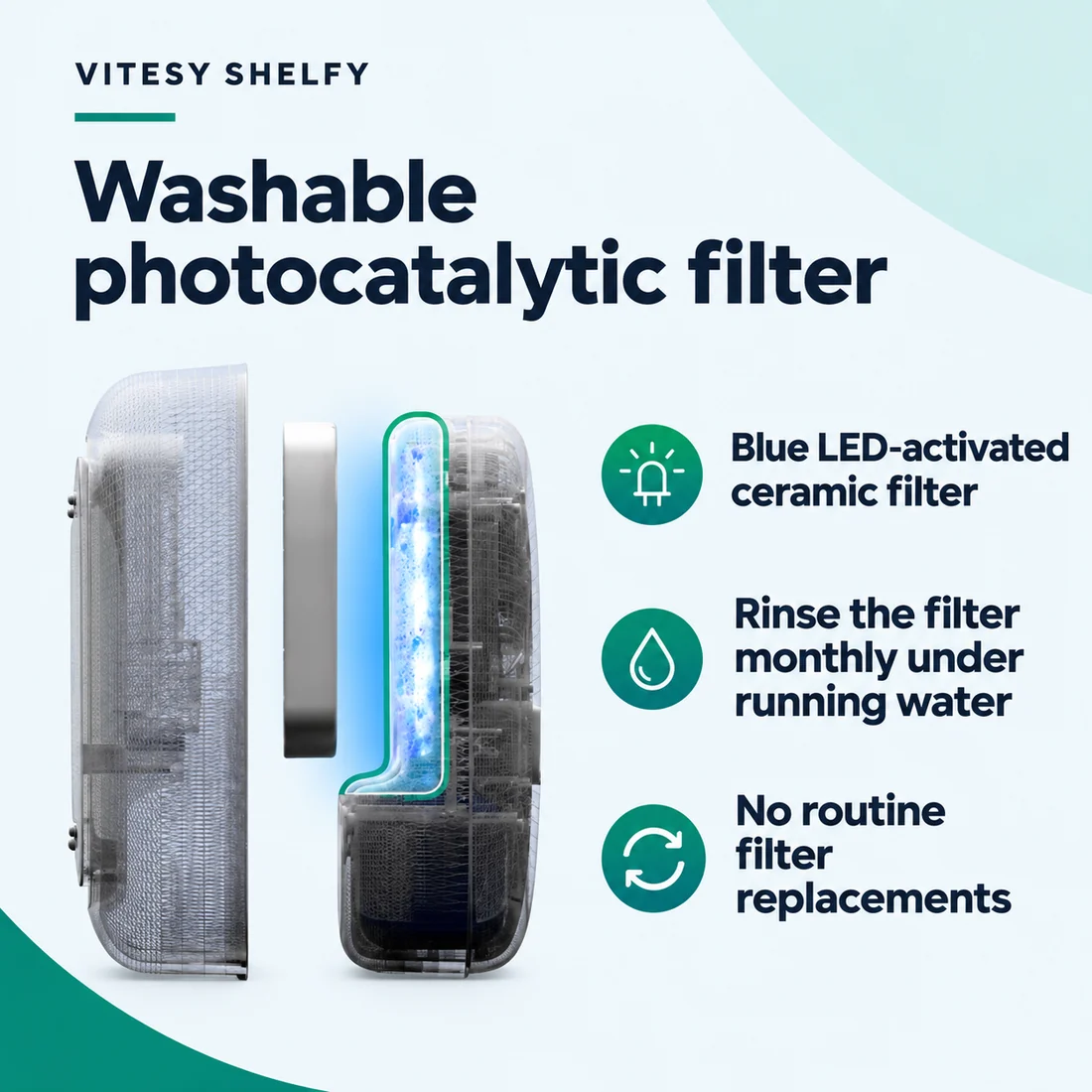
Blue LEDs inside Shelfy shine on a ceramic filter coated with a photocatalytic material. It is visible blue light, not UV.
The light switches the coating on. It reacts with the oxygen and moisture already in the fridge air and forms billions of very reactive molecules (free radicals) on the filter surface in a fraction of a second.
Bacteria, odour molecules and ethylene that reach the filter are broken down into water vapour and carbon dioxide. Nothing is collected, so nothing needs replacing.

Inside Shelfy
What it breaks down
Independent tests in Italy under specific laboratory conditions. Results at home vary with your fridge and what you store in it.

Ethylene
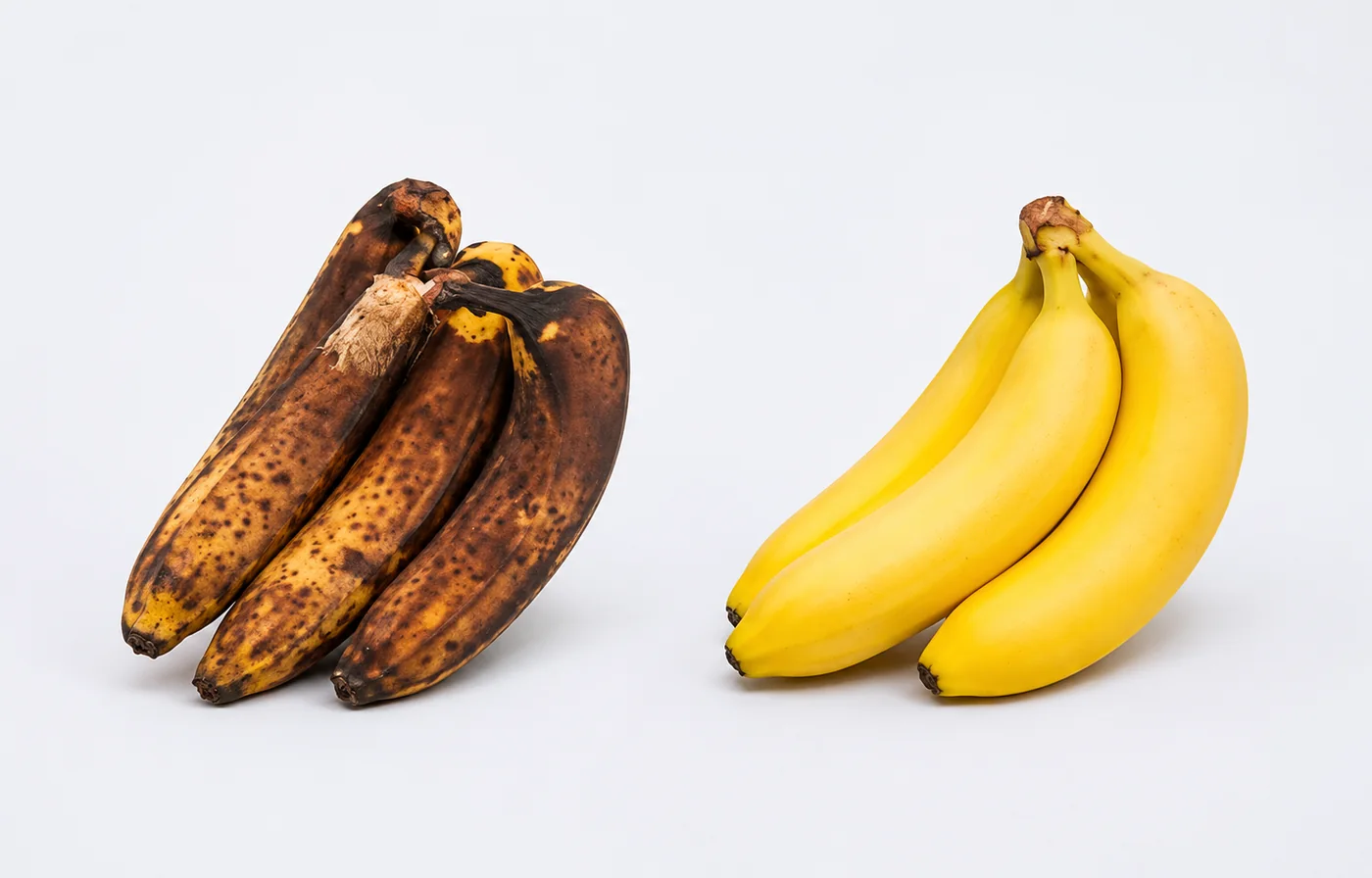
Fruit and vegetables release ethylene as they ripen. In a closed fridge it builds up and speeds up ripening for everything around it. By breaking ethylene down, Shelfy slows that chain reaction, so produce stays at its best for longer and you can see more clearly what to eat first.
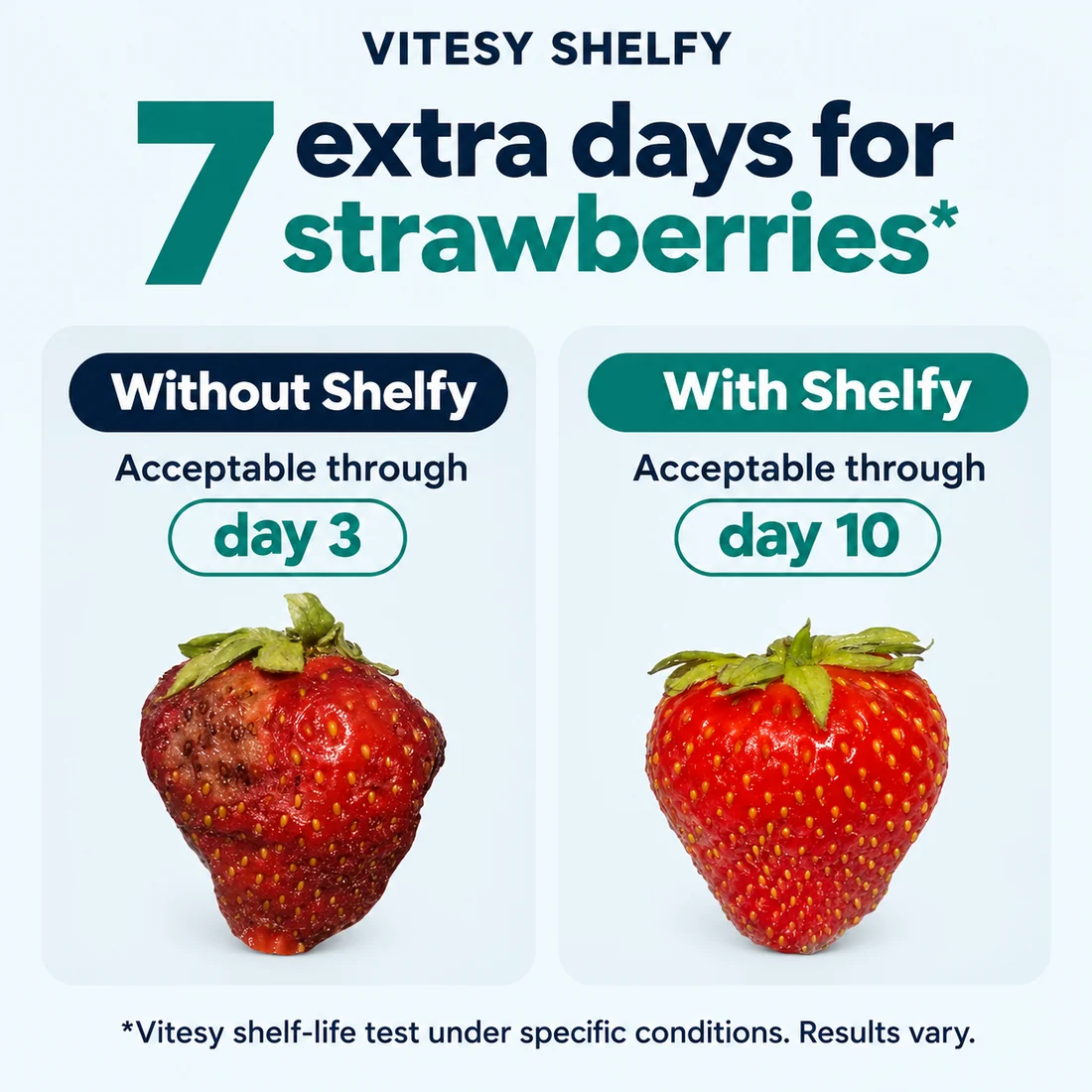
In shelf-life tests, strawberries stayed acceptable until day 10 with Shelfy, compared with day 3 without it.
Safe by design
Safe around food
Visible light only
Odours eliminated, not masked
Rinse and reuse
Effective on
The free radicals formed on the filter react with whatever reaches it. That is why the same technology works on very different things in the air.
In the air you breathe
Released by paints, plywood, glues and insulation.
From air conditioning, heating, mould and dust.
A solvent found in paints and glues.
Mostly from household cleaning products.
Results reported by VITESY for its PCO filter technology under laboratory conditions. Figures for each product are shown on its own page and in its test report.
Low energy
The reaction is started by light, not by heat or a powerful fan, so VITESY devices use very little energy. Shelfy runs for about 3 weeks on one charge in Eco mode, and Deo needs no power at all.
VITESY Hub app
Catalysis

A catalytic filter captures odour molecules and oxidises them, using the oxygen in the air, into carbon dioxide and water. The catalyst is not used up, so it keeps working for up to 10 years with no power and no refills.

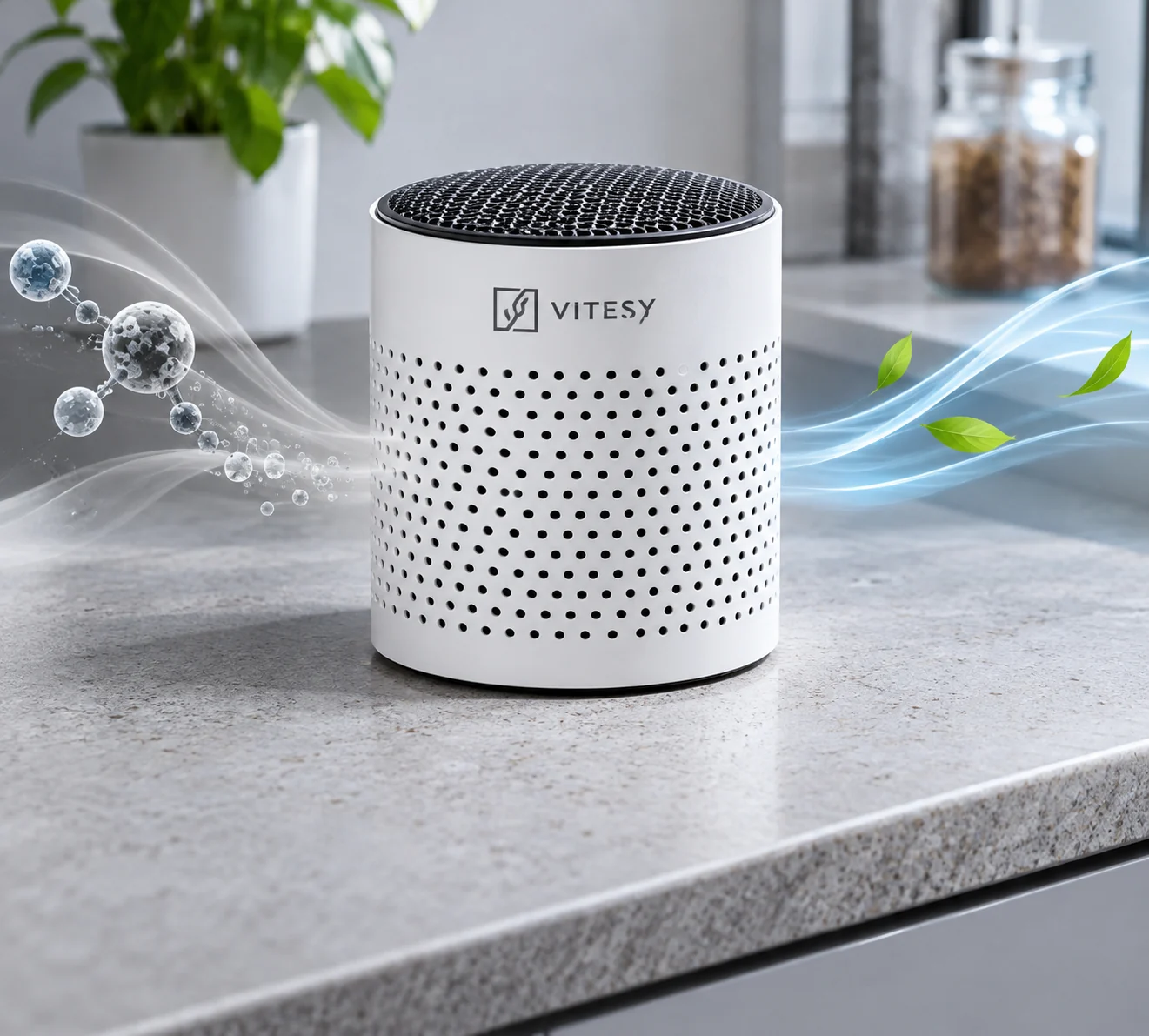
A catalytic module in the lid works against ethylene, mould spores and odours on the countertop. Nothing to switch on, recharge or refill.
Independent testing
Shelfy was tested in Italy with CSI S.p.A. (IMQ Group), one of Europe’s largest testing and certification groups, the University of Udine, Chimicambiente, ARCO SolutionS, INSTM and ACEA.
Reports
Shelfy is available in the UAE with free delivery over AED 150 and a 2-year warranty.