What is a fridge air purifier, and how does Shelfy work?
Ethylene, odour molecules and mould spores build up in every closed fridge. Here is what they do to your food, how Shelfy's light-activated filter breaks them down, and what the lab data does and does not show.
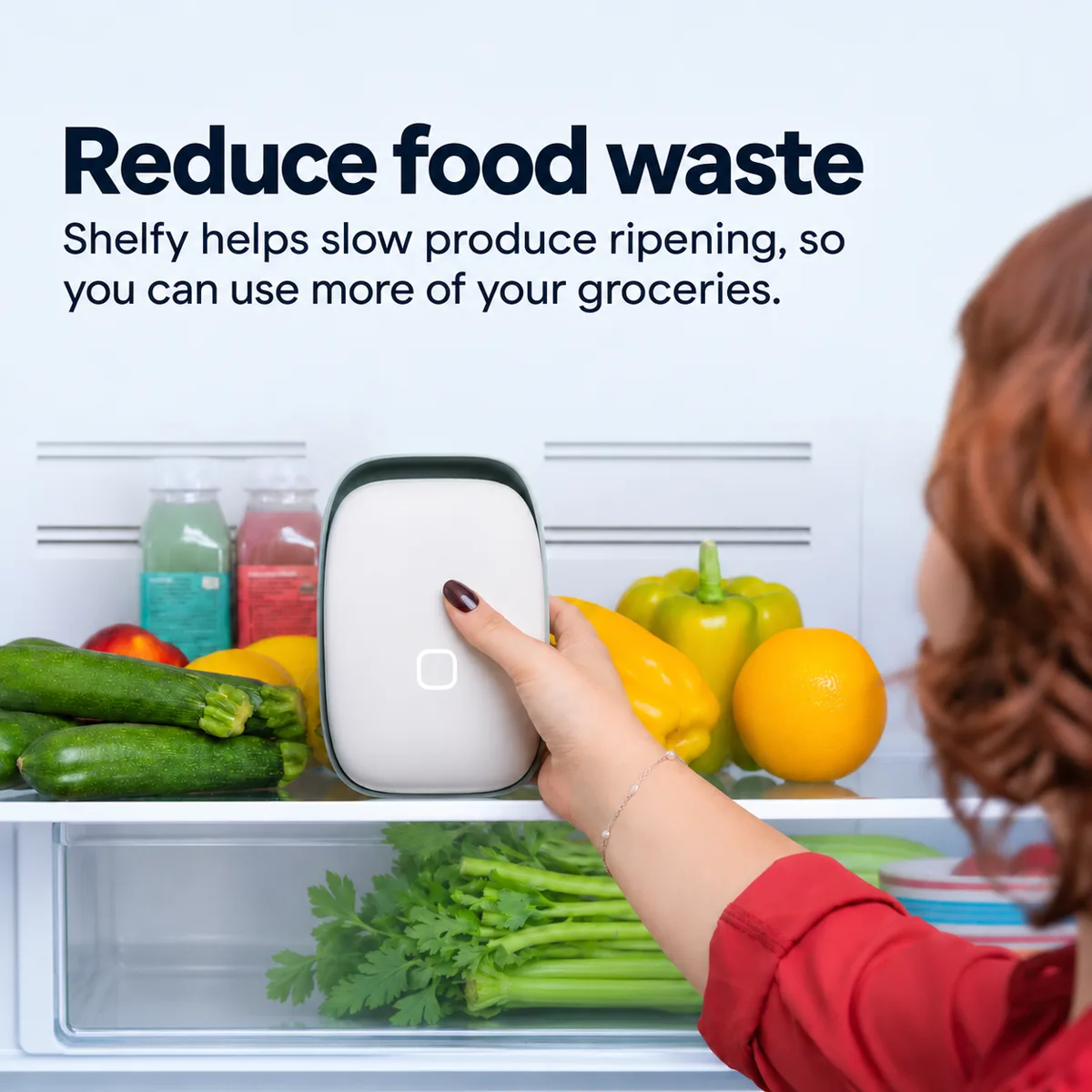
Short answer: A fridge air purifier cleans the air inside your fridge. Shelfy, VITESY's fridge air purifier, uses a fan to pull air through a ceramic filter coated with a light-activated catalyst, which breaks down ethylene, odour molecules and airborne microbes. It acts on the air, not the food, and it does not replace a cold fridge.
What builds up in fridge air?
A closed fridge is a small box of air that is rarely changed. Four things build up in it, and each one affects your food differently.
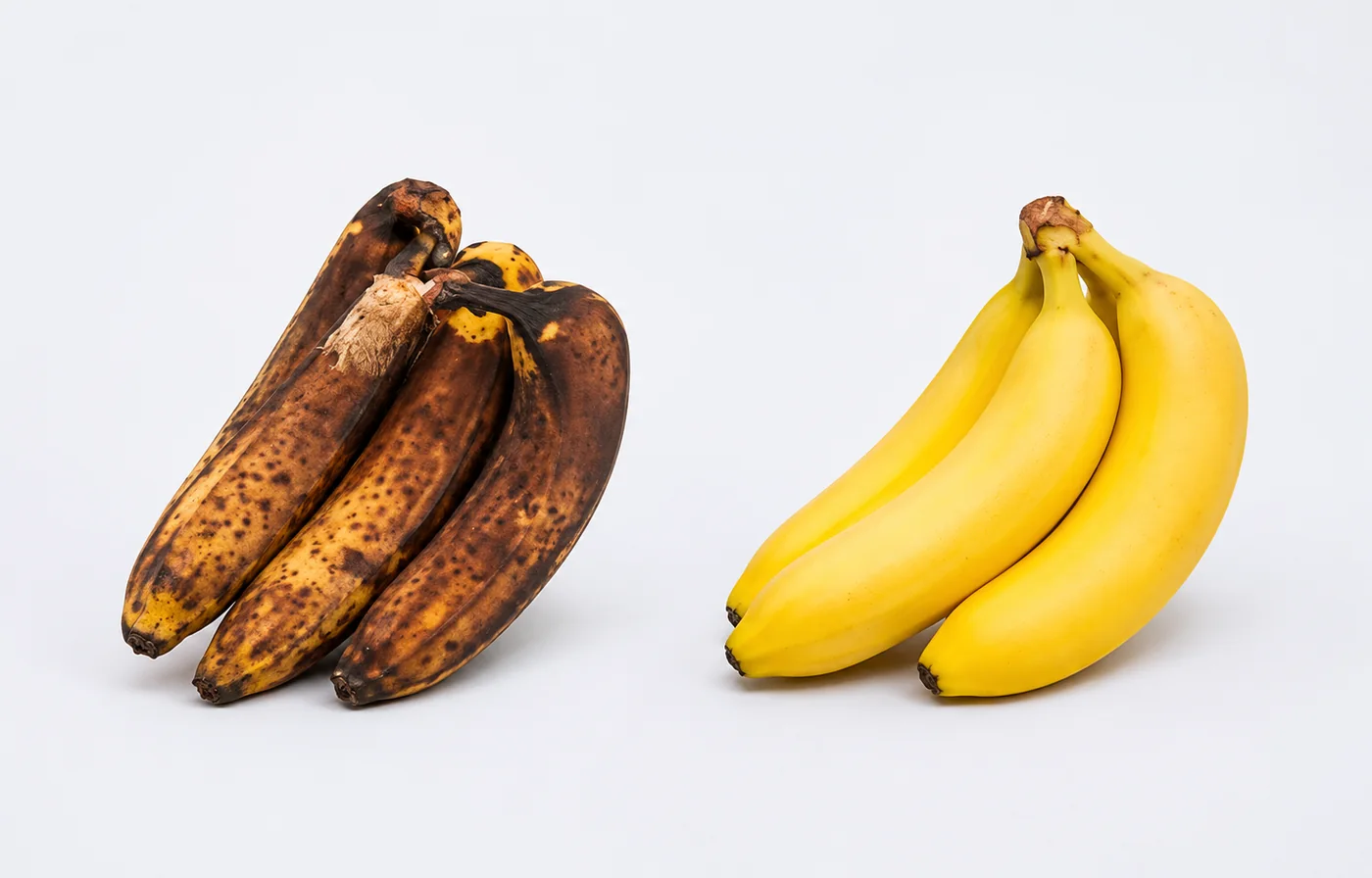
- Ethylene. A natural plant hormone given off by ripening fruit such as apples, pears, apricots, avocados and ripe bananas. It is colourless and has no smell, but it tells nearby produce to ripen. Leafy greens, cucumbers, broccoli and herbs are especially sensitive, so they yellow and soften sooner. Our guide to storing berries, herbs and leafy greens shows how to keep them apart.
- VOCs (volatile organic compounds). The aromas released by ripening fruit, cheese, onions, sauces and leftovers. In small amounts they are simply the smell of a fridge that gets used.
- Odour molecules from spoiling food. Trimethylamine is the sharp smell of fish that is no longer fresh, and hexanal is linked to fats turning rancid. These molecules drift and settle on other foods, which is how butter ends up tasting of last night's curry.
- Mould spores and bacteria. They come in on produce and with room air every time the door opens. Moulds can grow even at fridge temperatures, which is why one soft strawberry can spoil the whole punnet.
How does a photocatalytic fridge air purifier work?
Shelfy uses photocatalytic oxidation, usually shortened to PCO. In plain words: a coating that does nothing in the dark becomes chemically active under light, and breaks down the molecules that touch it. Here is the cycle inside Shelfy.
- A small fan draws fridge air into the unit.
- The air flows through a ceramic filter coated with a photocatalyst.
- Visible blue LEDs activate the catalyst. The original Shelfy model, used in Vitesy's lab tests, had white LEDs.
- Ethylene, odour molecules and microbes that reach the activated surface are oxidised and broken down into simpler substances.
- Cleaner air returns to the fridge. Shelfy runs in cycles rather than non-stop.
What it does not use matters too: no ozone and no ultraviolet light. And because a catalyst is not used up in the reaction, there are no replacement filters. You rinse the filter about once a month and let it air-dry.
Shelfy vs ozone deodorisers vs baking soda and charcoal
Search for a refrigerator air purifier in the UAE and you will find three kinds of product side by side. They work in very different ways.
| Feature | Shelfy (PCO) | Ozone deodoriser | Baking soda or charcoal |
|---|---|---|---|
| How it works | A fan moves air over a light-activated catalyst that breaks molecules down | Makes ozone gas, which reacts with some odour molecules | Passive: absorbs some odours from the air that drifts past |
| Ozone output | None: ozone free and UV free | Yes, by design | None |
| Effect on ethylene | 56.3% lower in 14 hours in Vitesy's sealed 210-litre box test (original model) | Depends on the ozone level; see the EPA's verdict below | Not designed to remove it |
| Maintenance | Rinse the filter about monthly; recharge by USB-C | Batteries or charging | Replace once it stops working |
| Main limitation | Works on the air, not on food or spills | Ozone can harm the lungs | Fills up over time and only catches what drifts past |
The US Environmental Protection Agency is blunt about ozone devices sold as air cleaners: at concentrations that do not exceed public health standards, "ozone is generally ineffective in controlling indoor air pollution". It adds that inhaled ozone can damage the lungs, and that ozone can damage materials such as rubber. Baking soda and activated charcoal are cheap and harmless, and university fridge-cleaning guides still suggest them after a deep clean, but they are passive: they only catch what drifts past.
What did Vitesy's lab tests find?
Vitesy's Shelfy test report (Rev. 1, November 2023) covers six tests on the original Shelfy model, run with Italian laboratories and universities. The figures below are Vitesy's, with the conditions that matter.
| What was measured | Test conditions | Result reported by Vitesy |
|---|---|---|
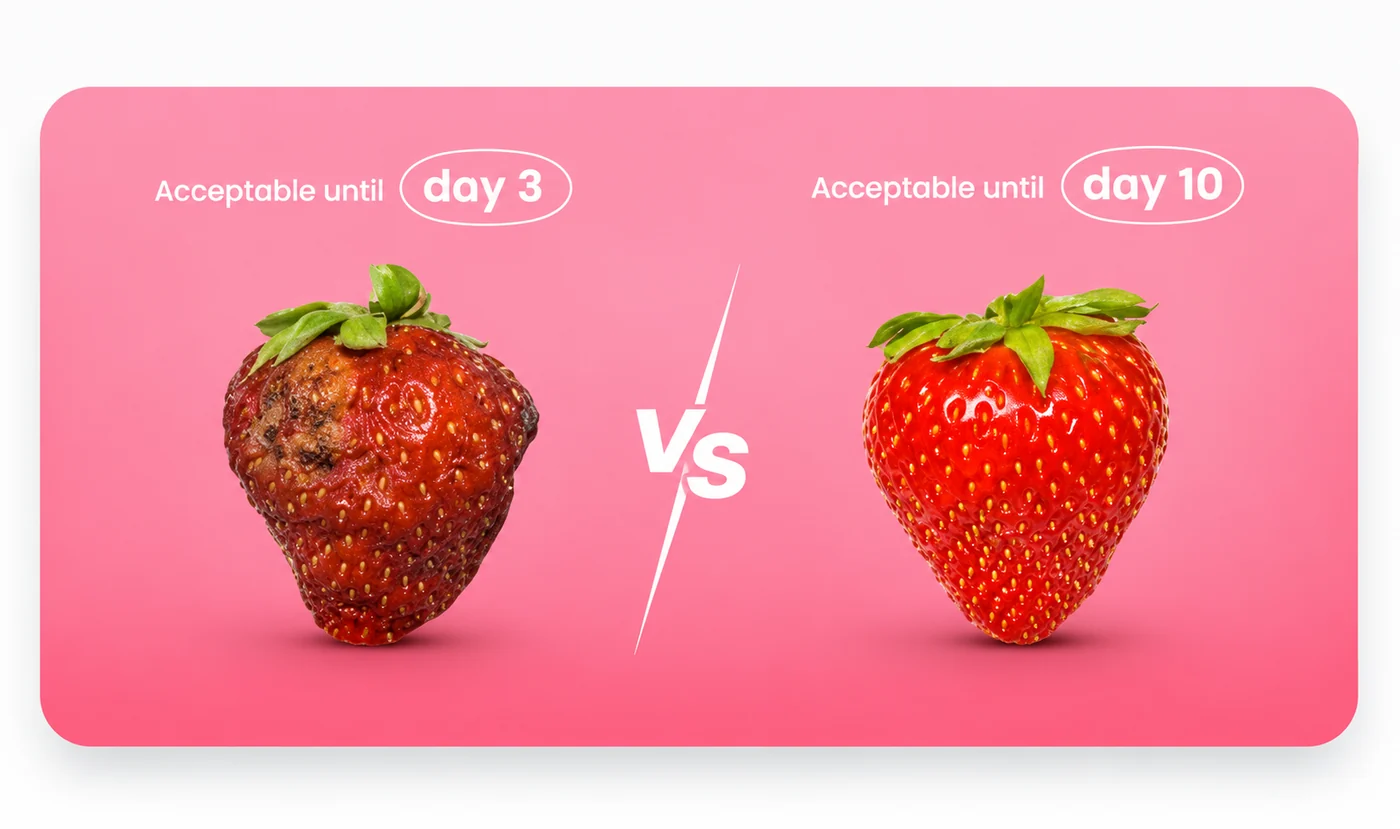
| Shelf life of produce | Two lab fridges at 6 °C, each with an avocado as an ethylene source | Strawberries 10 days vs 3 without Shelfy; courgettes 22 vs 10; apricots 17 vs 10; cherry tomatoes 22 vs 14; Belgian endive 7 vs 3 |
| Airborne test bacteria | 180-litre fridge, bacteria sprayed into the air | 99.37% fewer after 10 minutes |
| Natural airborne microbes (mostly moulds) | Two 220-litre fridges, with the University of Udine | 95% and 97% fewer in two tests |
| VOCs from ripening apples and avocados | 370-litre fridge at 4 °C | 80% lower after 5 hours |
| Trimethylamine (fish smell) | Sealed 118-litre test box | 73% lower in 5 hours |
| Ethylene | Sealed 210-litre test box | 56.3% lower in 14 hours, against 5% without Shelfy |
Read them for what they are. The bacteria figure describes microbes in the air, not on food. The shelf-life test ran at 6 °C, a little warmer than the 4 °C that food-safety agencies recommend, and Vitesy states that results may vary with the food, the fridge, how often the door opens and how full the shelves are. You can read the full report on our research page.
Do fridge air purifiers work?
Honestly, it depends on the type and on what you expect. A photocatalytic purifier like Shelfy has published, attributed lab data showing lower ethylene, odour compounds and airborne microbes under controlled conditions. Ozone gadgets are cheap, but the EPA's view is that ozone at safe levels does little against indoor pollutants. Baking soda can take the edge off mild smells.
No fridge air purifier can rescue food that has already gone off, make up for a fridge running at 8 °C, or clean a spill that has soaked into a drawer. Where Shelfy earns its place is in a fridge that is already cold and clean, slowing the build-up of ethylene and smells between your weekly shops.
What Shelfy cannot do
- It is not a food-safety device. Vitesy says Shelfy acts on the air inside the fridge, not directly on the food, and advises against treating it as a safeguard against foodborne illness or spoilage.
- It does not replace a cold fridge. Keep the fridge at 4 °C or below, as the US FDA advises, and check it with a thermometer. Our guide to stopping groceries spoiling in a UAE summer covers the basics.
- It does not clean. Spills, sticky drawers and forgotten containers still need wiping and clearing out.
- It does not change leftover rules. Cooked food keeps for the same number of days with or without it, so check how long leftovers last in the fridge.
How to set up Shelfy in a UAE fridge
- Placement. Stand it on a middle shelf. If fruit and vegetables are your main concern, it can sit in the crisper drawer in Crisper mode.
- Size. One Shelfy covers a fridge of about 300 litres. For the large double-door and side-by-side fridges common in UAE villas, anything above 350 litres, use two.
- Modes and battery. Eco mode runs about 3 weeks per USB-C charge, Crisper mode a few days less and Performance mode 4 to 5 days. Performance suits the days after a big shop or a family gathering; Eco suits the rest of the month.
- Monthly rinse. About once a month, rinse the ceramic filter under the tap, let it air-dry fully and put it back.
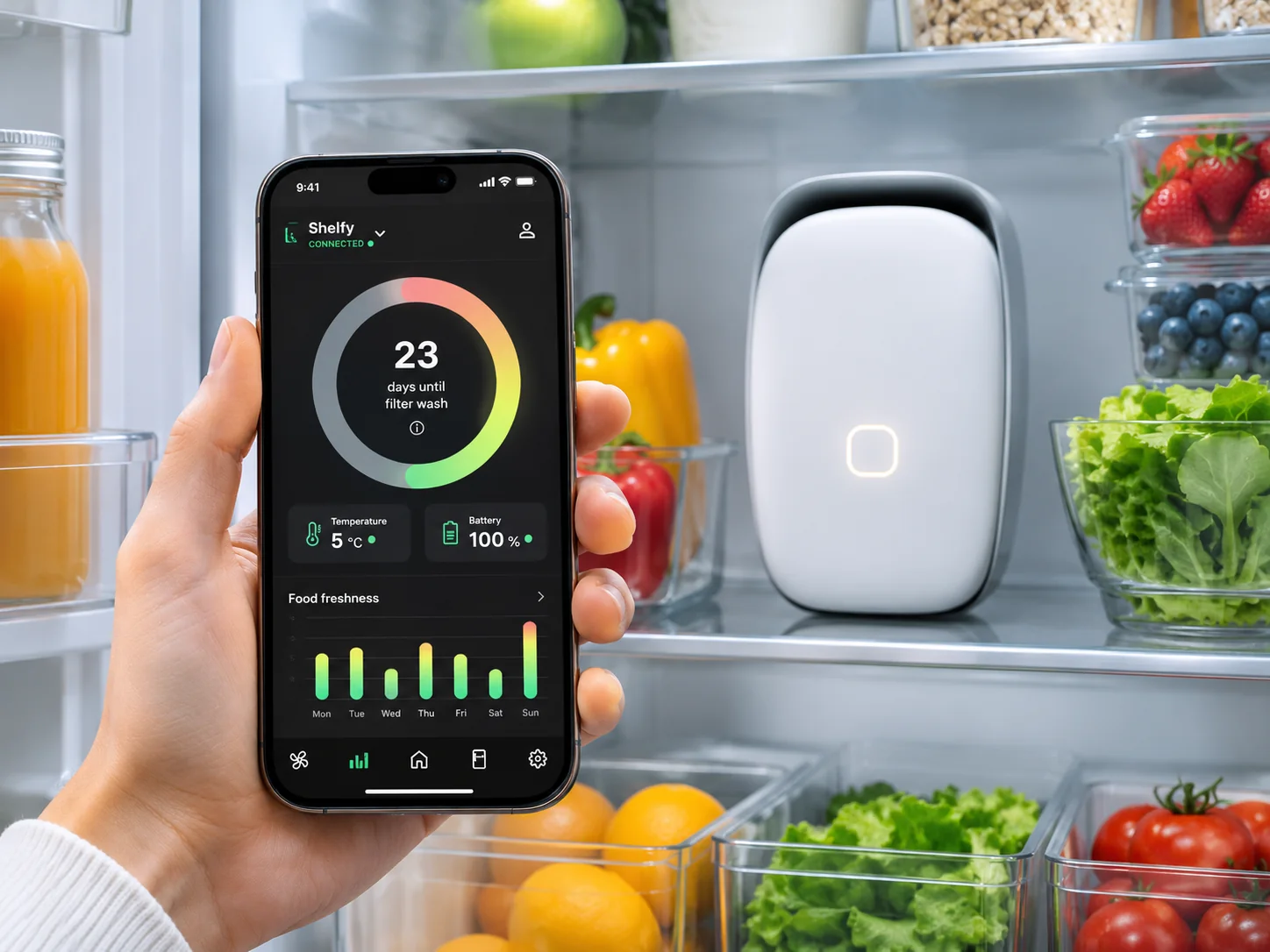
- The app. The Vitesy Hub app for iOS and Android shows your fridge temperature, door openings and battery level, and reminds you when the filter needs a wash. Shelfy also works without the app, using its button.
Further reading
For a closer look at the safety of photocatalytic and ozone technology, HawaQ's guide to PCO vs ozone fridge air purifiers is a good next read, and PRO TECHnology explains how to test Shelfy at home with a side-by-side trial. When you are ready, see Shelfy in our shop. In the UAE, VITESY is distributed by PRO TECHnology, a Dubai company.
Frequently asked questions
How does a fridge air purifier work?
A photocatalytic fridge air purifier such as Shelfy uses a small fan to draw fridge air through a ceramic filter coated with a catalyst. Visible blue LEDs activate the catalyst, which oxidises ethylene, odour molecules and airborne microbes into simpler substances, and cleaner air returns to the fridge. It runs in cycles and uses no ozone and no UV light.
Do fridge air purifiers work?
It depends on the type. Photocatalytic models such as Shelfy have published lab data: in Vitesy's tests on the original Shelfy model, ethylene fell 56.3% in 14 hours and VOCs from ripening fruit fell 80% in 5 hours under controlled conditions. Ozone gadgets have weak evidence at safe levels, and baking soda is passive. None replaces a clean fridge at 4 °C or below.
Does Shelfy produce ozone?
No. Shelfy uses photocatalytic oxidation: a fan moves fridge air across a ceramic filter coated with a catalyst, which visible blue LEDs activate. Vitesy describes it as ozone free and UV free. That is the key difference from ozone deodorisers, which make ozone on purpose, a gas the US EPA says can damage the lungs when inhaled.
Where should I put a fridge air purifier?
Put Shelfy on a middle shelf of the fridge for everyday use. If fruit and vegetables are your main concern, it can go in the crisper drawer in Crisper mode. One unit covers a fridge of about 300 litres. For larger fridges above 350 litres, such as many double-door and side-by-side models in UAE villas, use two.
How often should I clean Shelfy's filter?
Rinse the ceramic filter under the tap about once a month, then let it air-dry completely before putting it back. There are no replacement filters or cartridges to buy. The Vitesy Hub app reminds you when a wash is due, and the battery recharges by USB-C: about 3 weeks per charge in Eco mode and 4 to 5 days in Performance mode.
Is a fridge air purifier a food-safety device?
No. Vitesy says Shelfy acts on the air inside the fridge, not directly on the food, and that results may vary. It can slow the build-up of ethylene and smells, but food safety still depends on keeping the fridge at 4 °C or below, refrigerating leftovers within 2 hours and following safe storage times.
Sources
- Vitesy: Shelfy Test Report, Rev. 1, November 2023
- US EPA: Ozone Generators that are Sold as Air Cleaners
- University of Nebraska-Lincoln Extension: Solving Odor Problems in Your Refrigerator or Freezer
- UC Davis Postharvest Technology Center: Storing Fresh Fruits and Vegetables for Better Taste
- US FDA: Are You Storing Food Safely?