Why does food spoil faster in summer? How to stop your groceries going off in the UAE
Heat is the hidden ingredient in every mouldy punnet of berries. Here is what warmth does to food, where UAE summers catch you out, and a routine that keeps your shopping fresh from the shop shelf to your fridge.
Short answer: Food goes bad faster in summer because warmth speeds up the bacteria and moulds that spoil it. Between 4 °C and 60 °C, bacteria can double in as little as 20 minutes. In the UAE, groceries meet that heat in the car, at the door and in warm kitchens, so keep the trip from shop to fridge short.
Why does food spoil faster in summer?
Food spoilage is mostly a temperature story. The US Department of Agriculture calls 4 °C to 60 °C the "danger zone": in that range, bacteria grow most rapidly. Below 4 °C they slow right down, which is the whole point of a fridge. Above it, the clock speeds up.
Two rules follow. Perishable food should not sit out for more than 2 hours. If the air is above 32 °C, the limit drops to 1 hour. In a UAE summer, when highs regularly pass 45 °C, the 1-hour rule applies almost every time food leaves an air-conditioned space.
Heat is not the whole story. Warmth makes fruit and vegetables ripen and soften sooner, and moulds thrive where it is warm and damp. There is also a difference between food going off and food being unsafe. The US Food and Drug Administration (FDA) points out that the bacteria that make food look and smell spoiled are not the ones that cause food poisoning, so food can make you ill even when it seems fine.
Where UAE summers catch your groceries out
Most summer spoilage starts before the food reaches the fridge, or because the fridge is warmer than you think. These are the weak links in a typical UAE week.
- The car park. The FDA warns that a car is probably even hotter than room temperature, and that groceries should never stay in it for more than 1 hour on a hot day. A boot in a sunny mall car park is no place for chicken, even for a quick coffee stop.
- Doorstep deliveries. A bag left at a villa gate or in a corridor without air conditioning is sitting in the danger zone. The time it spent on the delivery bike counts too.
- A warm kitchen. If the AC is off while you are at work or away for the weekend, the kitchen heats up. Fruit bowls, bread and anything left on the counter feel it first.
- A busy fridge. Big families, guests and children fetching cold water mean the door opens many times a day. Each opening lets warm air in, and in a hot kitchen the fridge has to work harder to pull the temperature back down. A packed fridge makes it worse, because cold air cannot circulate.
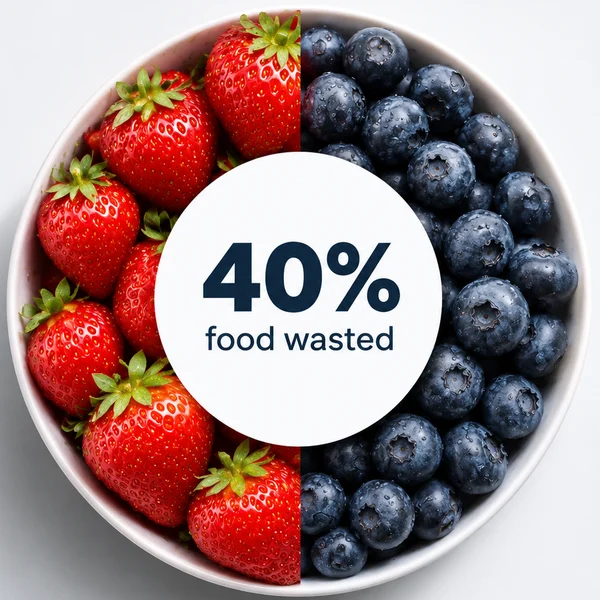
- Humidity and mould. In humid months, bread left in its bag on the counter and berries packed tightly in a punnet can turn mouldy within days. It shows in the bin: in Ne'ma's 2023 national survey, bread and bakery was the food UAE households waste most often (36%), ahead of vegetables (34%) and fruit (31%).
A summer grocery routine that works
You do not need new gadgets to cut summer food spoilage. You need a short, cold path from the shop shelf to your fridge. Use this as a checklist.
| Step | What to do | Why it helps |
|---|---|---|
| 1. Before you go | Check the fridge, plan meals for the next few days and write a list. | You buy less food that you cannot use before it turns. |
| 2. In the shop | Pick up chilled and frozen items last, and bag them together. | Cold items help keep each other cold. |
| 3. On the drive | Use an insulated cool bag with ice packs, keep it in the air-conditioned cabin rather than the boot, and go straight home. | On a hot day you have 1 hour, at most, before perishables need to be cold again. |
| 4. At home | Unpack meat, fish, dairy and leafy greens first, then everything else. | The most perishable foods spend the least time warm. |
| 5. Check the fridge | Keep a fridge thermometer on the middle shelf. It should read 4 °C or below, and the freezer -18 °C. | Few fridge dials show the real temperature. |
| 6. Leave space | Do not pack the fridge full after a big shop. Raw meat goes on the bottom shelf, in a container. | Cold air must circulate to keep food cold, and drips cannot reach ready-to-eat food. |
| 7. Freeze bread | Keep out what you will eat in a day or two and freeze the rest in slices. | You toast from frozen, and no mouldy loaf hides at the back of the cupboard. |
| 8. Handle berries gently | Store them unwashed in the fridge, wash just before eating and remove any mouldy fruit straight away. | Extra moisture speeds up mould. |
The list matters more than it sounds. Ne'ma's survey found that 60% of UAE residents plan their shopping or write a list but still get tempted, and half buy on special offers and in bulk. In summer, extra food simply has less time to be eaten. For a shelf-by-shelf plan, see our fridge organisation guide for UAE families, and find out which foods are better kept out of the fridge altogether in our guide to what not to refrigerate.
What about grocery deliveries?
Deliveries are a lifesaver in July, but they add a link to the cold chain that you do not control. A few habits help.
- Book a slot when someone is home, and ask for the bags to be handed over rather than left at the door.
- If you have to be out, leave a cool box with frozen ice packs by the door and ask the driver to put chilled items inside.
- Check chilled items on arrival. If meat, fish or dairy arrives warm, contact the store rather than taking the risk.
- Unpack straight away, cold items first, even if dinner is on the stove.
Power cuts and fridge breakdowns
A fridge that stays shut keeps food cold for about 4 hours without power, according to the FDA. Keep the door closed, and throw away perishable food such as meat, fish, milk, eggs and leftovers that has been above 4 °C for 4 hours or more. Smell is not a reliable test. If the fridge still smells after a power cut or a house move, this guide to clearing fridge smells after a power cut walks you through the clean-up.
Where Shelfy helps, and where it does not
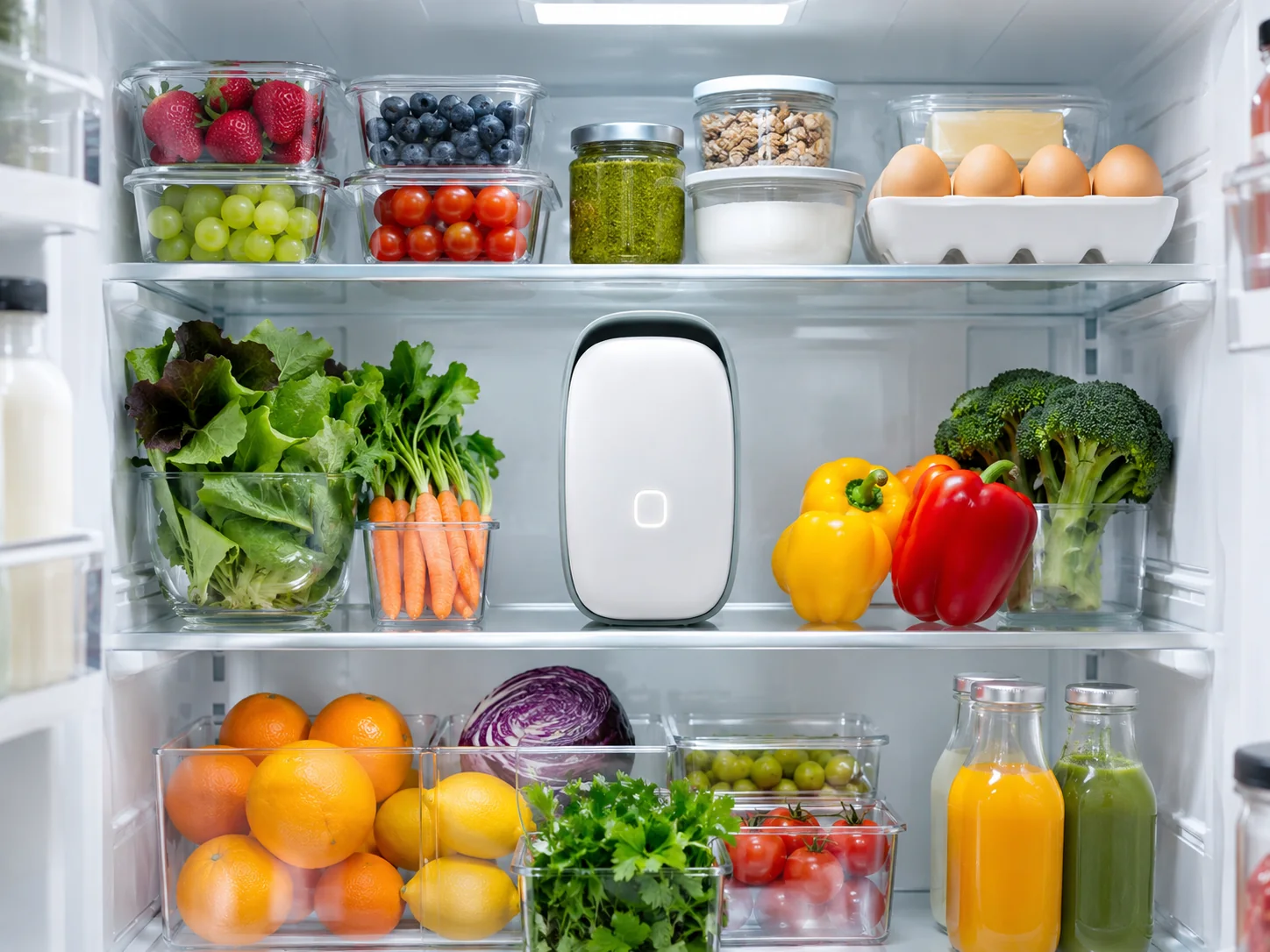
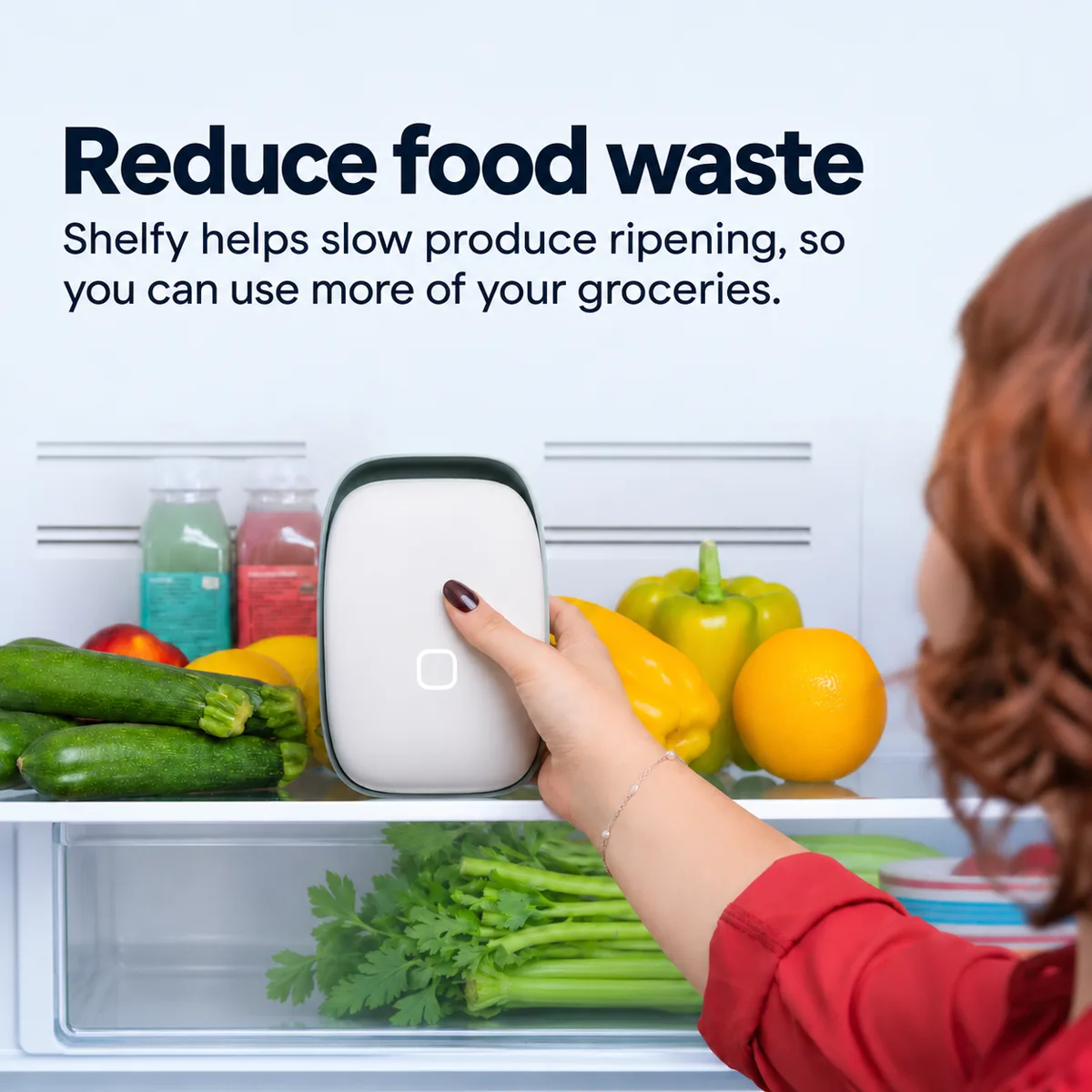
Shelfy is VITESY's fridge air purifier. A small fan draws fridge air through a ceramic filter coated with a light-activated catalyst, which breaks down ethylene, odours and airborne microbes. In Vitesy's lab tests on the original Shelfy model, in fridges at 6 °C with an avocado added as an ethylene source, strawberries stayed acceptable for 10 days instead of 3, and courgettes for 22 days instead of 10.
In summer, the most useful part may be the Vitesy Hub app. It shows your fridge temperature and how often the door opens, so you can see when a busy household is stopping the fridge from staying cold. Shelfy is not a food-safety device: Vitesy says it acts on the air, not the food, and that results may vary. Keeping the fridge at 4 °C or below still matters most. See how Shelfy works or read the full test reports.
Keep it short, keep it cold
Summer spoilage is mostly a timing problem. Shorten the trip from shop to fridge, keep the fridge at 4 °C or below and not too full, and eat the most delicate food first. If you want to see what spoiled food is costing your household, try our food waste calculator. In the UAE, VITESY is distributed by PRO TECHnology, a Dubai company.
Frequently asked questions
Why does food spoil faster in summer?
Warmth speeds up the bacteria and moulds that spoil food. Between 4 °C and 60 °C, bacteria multiply fastest and can double in as little as 20 minutes. Summer heat also makes fruit and vegetables ripen and soften sooner, and humid air helps mould grow on bread and berries. Keeping food cold, and getting it cold quickly after shopping, slows all of this down.
How long can groceries stay in a hot car?
On a hot day, no more than 1 hour, and less is better. US food safety guidance limits perishable food to 1 hour out of the fridge when the air is above 32 °C, and a car parked in the summer sun gets hotter than the air outside. Use an insulated bag with ice packs, keep it in the air-conditioned cabin and drive straight home.
Why is food going bad quickly in my fridge?
The usual reasons are a fridge running warmer than 4 °C, a door that opens constantly and shelves packed so tightly that cold air cannot circulate. Check the real temperature with a fridge thermometer, leave space between items, keep ethylene-producing fruit such as apples and avocados away from leafy greens, and remove anything mouldy before it spreads.
How do I keep food fresh in summer in the UAE?
Keep the trip from shop to fridge short: pick up chilled items last, use a cool bag with ice packs and unpack cold food first. Keep the fridge at 4 °C or below and do not overfill it. Freeze bread you will not eat within a day or two, store berries unwashed, and plan meals so the most delicate foods are eaten first.
How long can cooked food be left out in hot weather?
No more than 2 hours at normal room temperature, and only 1 hour if the air is above 32 °C, for example at an outdoor barbecue or on a terrace in summer. After that, bacteria may have multiplied to unsafe levels even if the food looks and smells fine. Divide leftovers into shallow containers and put them in the fridge promptly.
Sources
- USDA Food Safety and Inspection Service: "Danger Zone" (40 °F to 140 °F)
- US FDA: Refrigerator Thermometers, Cold Facts about Food Safety
- US FDA: Are You Storing Food Safely?
- Khaleej Times: First-ever UAE household survey reveals how residents eat, waste food (Ne'ma, December 2023)
- UC Davis Postharvest Technology Center: Storing Fresh Fruits and Vegetables for Better Taste
- Vitesy: Shelfy Test Report, Rev. 1, November 2023